
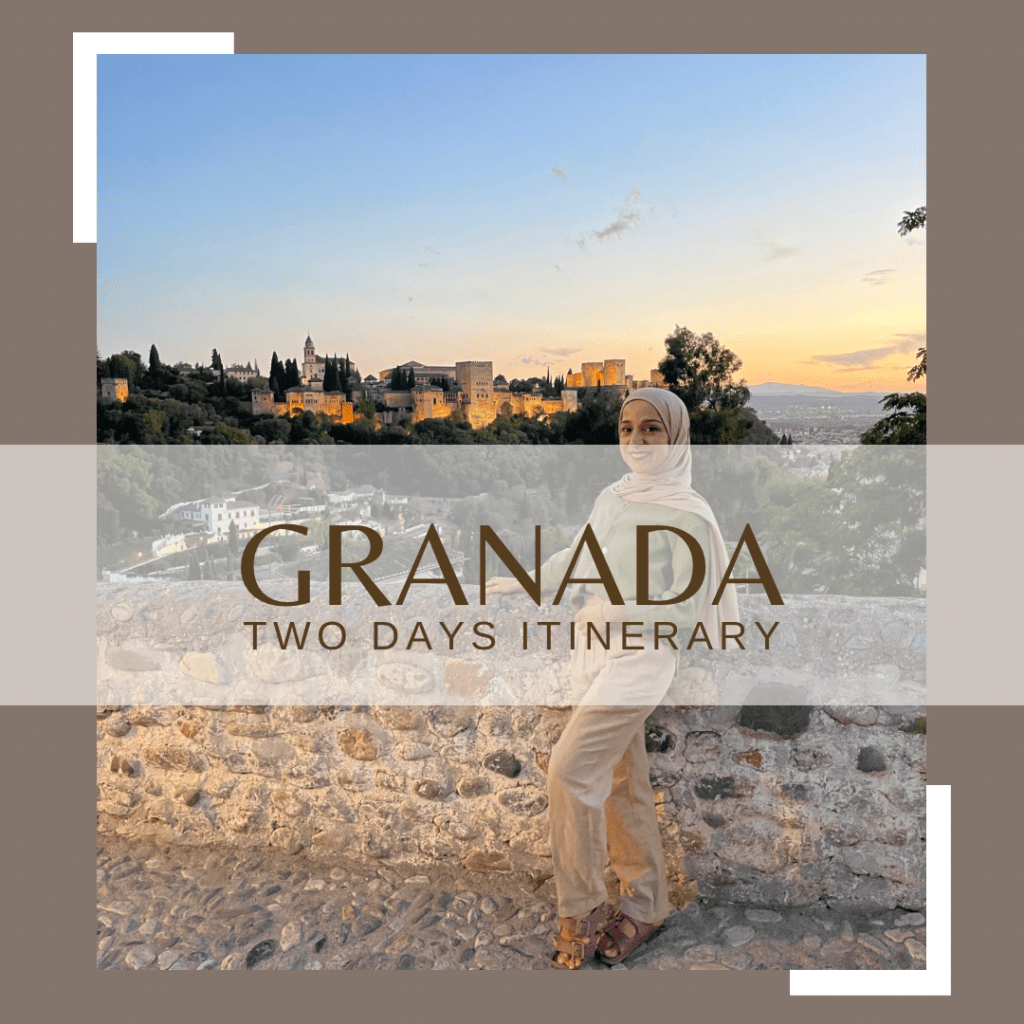
After years of having this trip in mind, I finally made it and it was the worth the wait. This post is one of five, each for one of the cities that visited. I tried to cover in each, the history along with the things to do, see and where to eat and sleep as well as practical information for the transportation and so.
Itinerary
The plan was a follows:
– Day 1: Departure from Beirut with a short layover in Istanbul to reach Madrid around 5 pm, sleep in Madrid (details in separate post)
– Day 2: Spend the morning in Madrid and take the train to Granada (around 3h40 min), check in at the hotel (NH collection; details follow) and explore the city (Albaicin)
– Day 3: Granada Sight seeing, explore Alhambra (tickets pre booked with a guide; details follow), afternoon explore Sacramonte…
– Day 4: Spend the morning in Granada, take the train to Seville (around 3 h), check in at the hotel (details in separate post).
– Day 5: Explore Seville , day trip to Cordoba (1 hr by train)
– Day 6: Spend the morning in Seville, take the train to Madrid (around 3 h), sleep in Madrid (details in separate post)
– Day 7: Full day in Madrid
– Day 8: Departure to Lisbon (1 hr by plane); details in separate post
– Day 9: Lisbon day 2 and departure at night to Madrid
– Day 10: Trip back to Beirut (direct flight)
Granada’s history
Granada holds immense importance in Muslim culture due to its rich history as a prominent center of Islamic civilization in Spain. Here are some key aspects that highlight its significance:
Last Stronghold of Muslim Spain: Granada was the last Muslim stronghold in the Iberian Peninsula, or Al-Andalus, before its fall to Christian forces in 1492. This makes it a symbol of resistance and the final chapter of a nearly 800-year-long Muslim presence in Spain.
Nasrid Dynasty: Granada was ruled by the Nasrid Dynasty for centuries. Under their rule, the city flourished culturally, economically, and architecturally. The Nasrid rulers left behind a legacy of stunning Islamic architecture, including the Alhambra, which is considered one of the finest examples of Islamic art and design in the world.
Interfaith Harmony: During its Muslim rule, Granada was a hub of interfaith harmony and cultural exchange. Scholars, artists, and philosophers from different backgrounds congregated in the city, contributing to the blossoming of knowledge and the arts. This cultural coexistence left a lasting impact on the city’s identity.
Islamic Art and Architecture: Granada is renowned for its intricate Islamic art and architecture. The Alhambra, with its ornate tilework, stucco decoration, and serene gardens, showcases the sophistication and beauty of Islamic aesthetics. The city’s numerous mosques, such as the Mezquita Mayor, also reflect the architectural grandeur of the Islamic period.
Influence on Andalusian Culture: The legacy of Granada’s Muslim past has deeply influenced Andalusian culture. This influence can be seen in the region’s music, cuisine, and even its social customs. Flamenco, for example, is believed to have been influenced by Islamic musical traditions.
Today, Granada’s rich Islamic heritage is celebrated and preserved, attracting visitors from around the world who come to explore its historic sites, experience its cultural traditions, and appreciate the enduring impact of Muslim culture on this captivating city.

Granada’s trip (Highlights in my Instagram)
How to get there
I booked my train ticket ahead of time on OMIO, the ticket from Madrid costed 80 euros. The trip was long, but there is wifi on board, as for the cafeteria it was awful and so were the restrooms. Expect a long line when you arrive at the train station for taxi pick up!
Where to Stay
I stayed at NH collection, the room was quiet and spacious, it is around 10 minutes away from the train station and has a central location in the city where everything is walking distance. I usually skip h breakfast in hotels as I love to explore the city’s coffee shops for that! Else the service is amazing.

Where to eat /drink
I stumbled upon this gem of an account, Ismail is surely the true Granada and Andalusia expert! And besides the research that I have done before, I counted on his account to guide me to the best addresses in Andalusia and even in Madrid.
Coffee shops: Epicureum and Oteiza have amazing coffee and breakfast options. I also had on my list malamiga, noat, kona, atypica and atipico.
Restaurants: Bab Mansour for an authentic Moroccan cuisine in the heart of Granada, La Autentica Carmela and Los Manueles for authentic Spanish cuisine, and try also La Nonna Carmela for a great Italian cuisine.
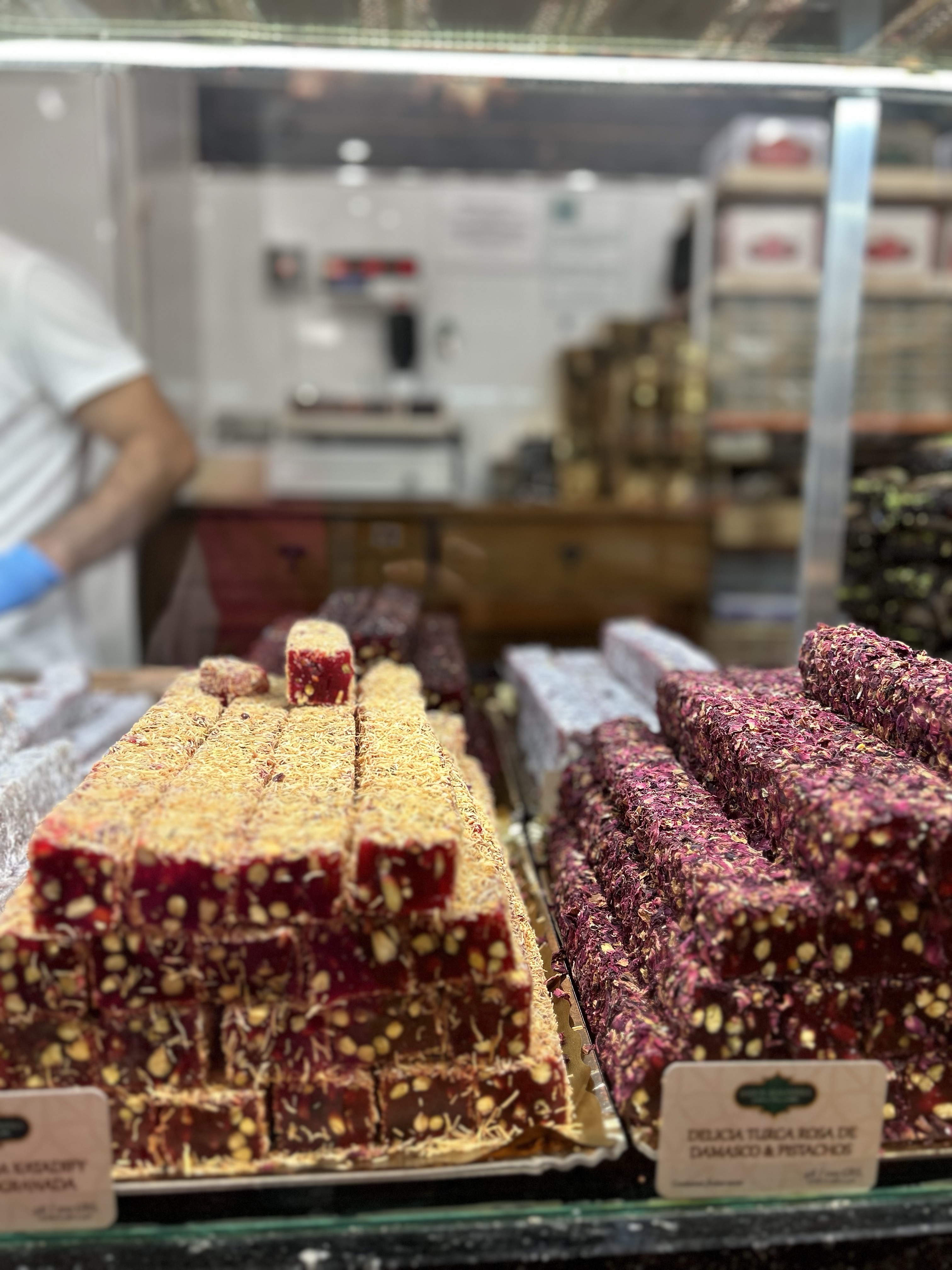
Desserts: Martonela for a fresh ice cream and fruit mix, Vicens for your torrons and don’t miss the random shops in Albaicin to get your fresh halwah!
What to see
1. Alhambra: The Crown Jewel of Moorish Splendor
The Alhambra, Generalife, and Nasrid Palace together constitute one of the most remarkable architectural and historical complexes in the world, showcasing the cultural evolution of Granada through the ages. The history of the Alhambra is a rich and multifaceted tale that spans centuries and multiple civilizations.
a. Alhambra: The Alhambra’s history can be traced back to the mid-13th century when it was founded by Muhammad I, the first Nasrid ruler of the Emirate of Granada. It initially served as a fortress and palace complex.
Nasrid Dynasty (13th to 15th century): The Alhambra as we know it today was primarily constructed during the Nasrid Dynasty, the last Muslim dynasty in the Iberian Peninsula. It was founded in the mid-13th century by Muhammad I, and successive Nasrid rulers expanded and embellished the complex over the next two centuries. The Nasrids imbued the Alhambra with exquisite Islamic architecture and artistry, creating palaces, courtyards, and gardens that showcased their wealth and cultural sophistication.
Christian Conquest : In 1492, Catholic Monarchs Ferdinand and Isabella completed the Reconquista, the Christian reconquest of Spain, with the capture of Granada. With this conquest, the Alhambra passed into Christian hands, and it was here that Columbus received royal support for his voyage to the Americas. The Christian rulers made some modifications to the complex but generally respected its beauty and historical significance.
Aging and Neglect (16th to 18th century): In the centuries following the Christian conquest, the Alhambra fell into a state of disrepair and neglect. Some parts of the complex were even used as military barracks. However, its architectural and historical importance did not go entirely unnoticed, and efforts were made to preserve it.
19th-century Restoration: In the 19th century, there was a renewed interest in preserving the Alhambra as a cultural treasure. Extensive restoration work began, with efforts to uncover and restore the complex’s original beauty and splendor. This restoration work continues to this day.
20th-century UNESCO Heritage Site: In 1984, the Alhambra was designated as a UNESCO World Heritage Site, recognizing its outstanding cultural and architectural significance. It is now one of Spain’s most visited and cherished historical landmarks, attracting millions of tourists from around the world.
b. Generalife
Summer Retreat: located adjacent to the Alhambra, served as the summer palace and gardens for the Nasrid rulers. Its name, “Jannat al-‘Arif” in Arabic, translates to “Garden of the Architect.”
Gardens and Fountains: stunning gardens, terraces, and fountains. It offers a peaceful escape from the bustling city below and showcases the Nasrids’ love for nature and aesthetics.
Architectural Marvel: the layout and design exemplify Islamic garden design principles, emphasizing symmetry, water features, and the harmonious integration of architecture with the natural surroundings.
c. Nasrid Palace
Crown Jewel: The Nasrid Palace within the Alhambra is the heart of the complex and the epitome of Nasrid architecture and artistry. It consists of a series of interconnected palaces, courtyards, and halls.
Intricate Details: The Nasrid Palace is celebrated for its intricate tile mosaics, stucco work, and delicate calligraphy, which adorn its walls, ceilings, and arches. The most famous rooms include the Court of the Lions and the Hall of the Ambassadors.
Historical Legacy: It was in the Nasrid Palace that the last Muslim rulers of Spain held court before the fall of Granada to the Catholic Monarchs. The palace reflects the Nasrids’ devotion to art, science, and culture.
2. Albaicín: a labyrinth of narrow streets and whitewashed houses, transports visitors to Granada’s Moorish past. Dating back over a millennium, it was a vibrant center of culture and trade under Nasrid rule. The Albaicín offers a glimpse into Islamic and Andalusian heritage through its architecture, courtyards, and historic squares. The architecture features traditional Andalusian and Moorish elements, including charming courtyards, elaborate tilework, and ornate doorways. Exploring Albaicín feels like stepping back in time.

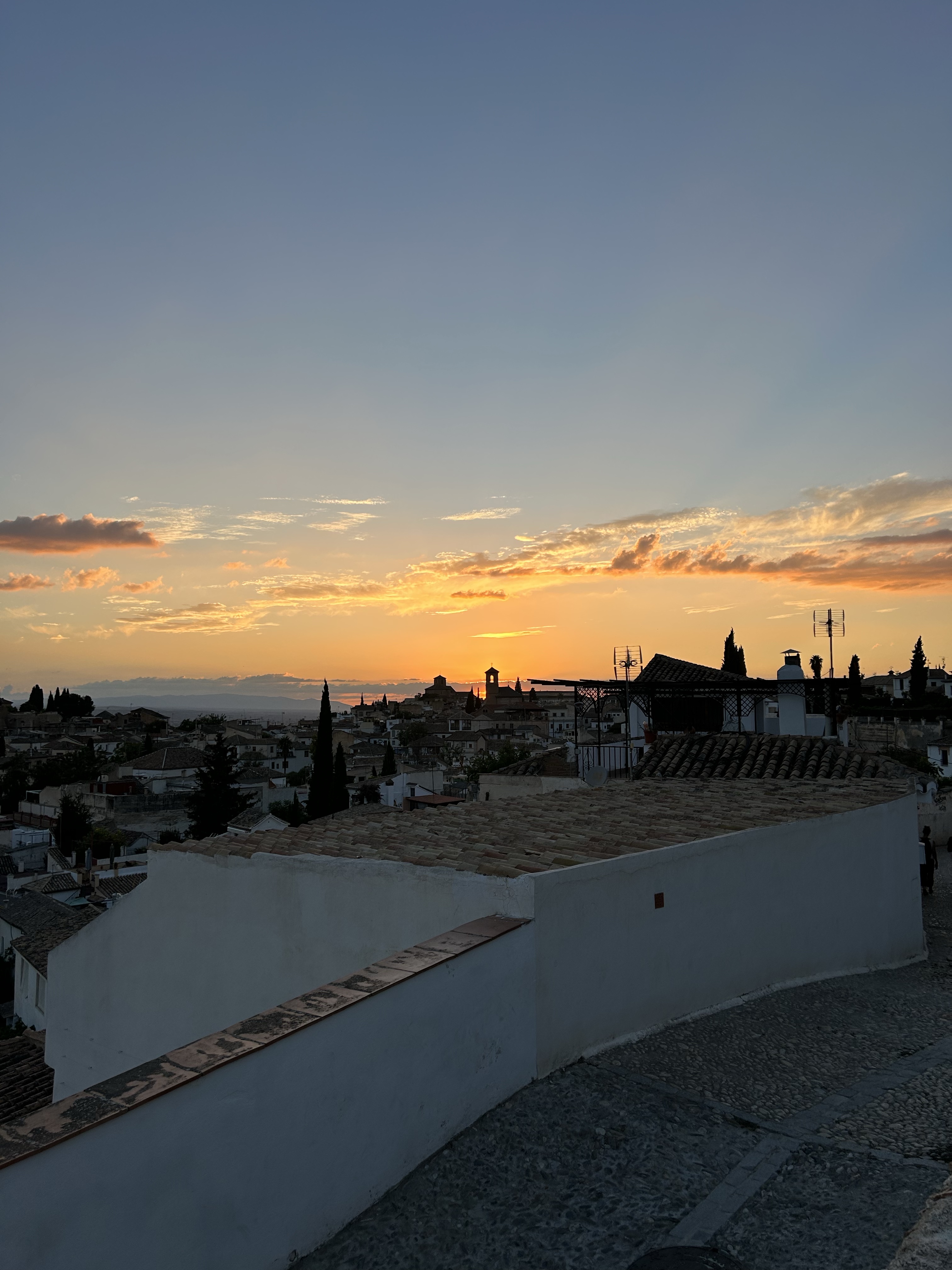
3. Miradores (Viewpoints): There are several miradores (viewpoints) in Albaicín that offer breathtaking vistas of the Alhambra, making it a popular spot for photographers and tourists. Saint Nicolas has a panoramic view of the Alhambra against the Sierra Nevada mountains is a timeless scene that encapsulates the beauty and historical significance of Granada. Ermita di Saint Miguel is even a better option to skip the crowds!
4. Sacromonte: has a unique history tied to the Romani people. The caves, carved into the hills, served as traditional dwellings and are a living testament to Granada’s diverse cultural influences. Today, Sacromonte is synonymous with Flamenco, and its intimate venues offer an authentic experience of this passionate art form.

5. Granada Cathedral: (I didn’t visit it though) a masterpiece of Spanish Renaissance architecture, was constructed over several centuries starting in the early 16th century. Its construction symbolizes the shift from Islamic to Christian rule in Granada. The interior boasts impressive chapels, altars, and religious art, making it a testament to Spain’s Catholic heritage.
How I planned my two days trip
Day 1: Arriving afternoon from Madrid
Afternoon:
5:00 PM – Albayzín and Plaza Nueva
I had late lunch at Bab Mansour, and walked to discover Albayzín. Ended the walk at Martonela for a sweet treat
Day 2: Exploring Granada
9:00 AM – Breakfast at Epicureum
11:00 AM – Alhambra Awakening
I started the walk from the city center all the way up to the iconic Alhambra. I booked with Abou Baker who is the most dedicated and knowledgeable tour guide! Together we explored the Nasrid Palaces, Generalife Gardens, and the Alcazaba fortress. The intricate details, serene courtyards, and breathtaking views will transport you to a bygone era. I had booked the guided tour with the tickets ahead of time. You need to be careful as the time stated on the ticket is for the Nasrid palaces which has limited number of visitors allowed, and you need to be on time for that. The visit took 3 hours and I enjoyed every bit of it.
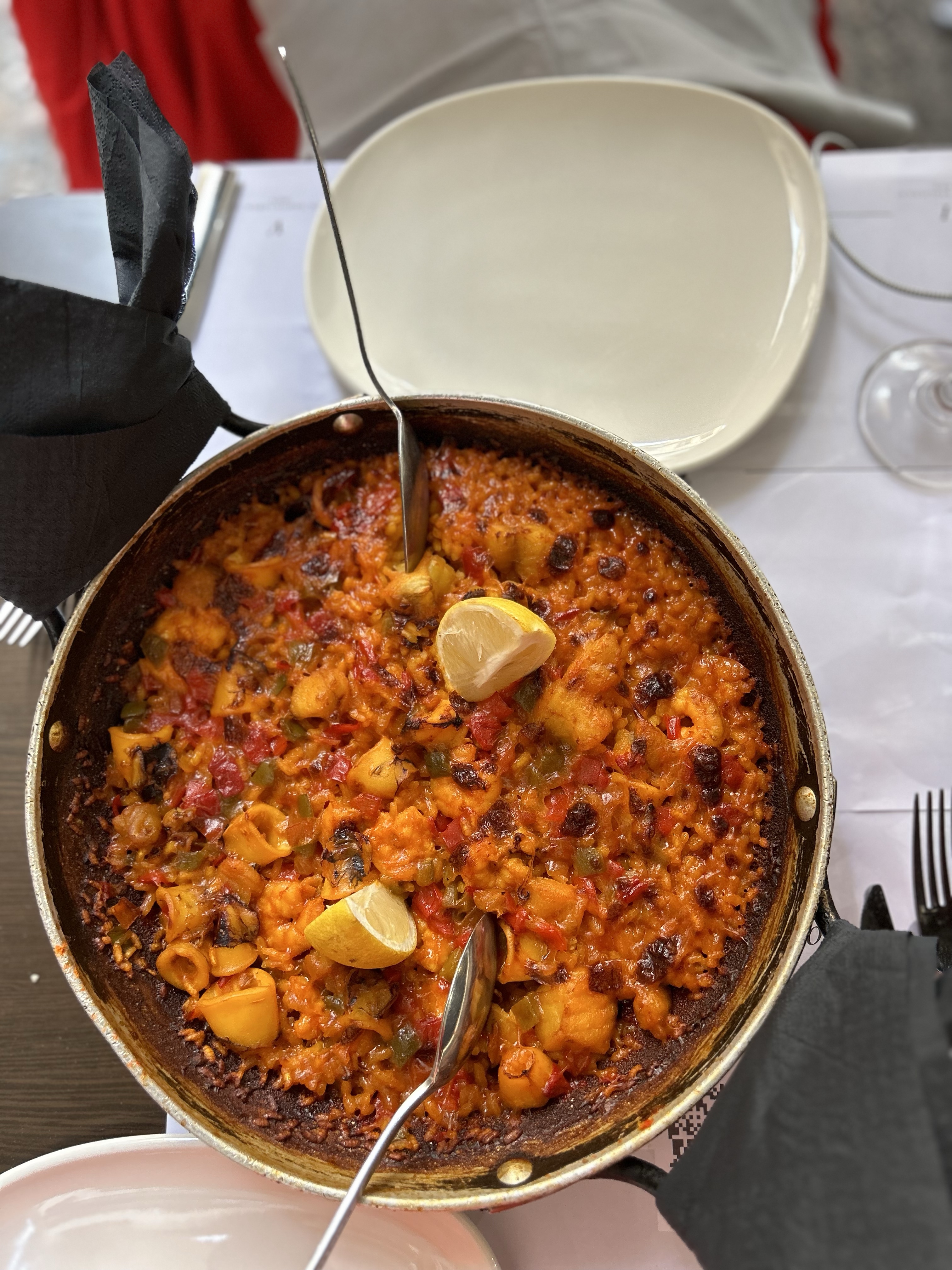
3:00 PM – Paella Lunch at Los Manueles
5:00 PM – Mirador de San Nicolás
Another beautiful walk to Mirador de San Nicolás for one of the most iconic views of the Alhambra. Capture the majestic palace against the backdrop of the Sierra Nevada mountains and live Flamenco show. Even better, I walked up to Ermita San Miguel which is less crowded and offers a more charming view!
7:00 PM – Explore Sacromonte
As the sun sets, I continued the walk to Sacromonte, renowned for its cave dwellings and Flamenco performances. And then walked all the way back to enjoy dinner at la Carmela Authentica.
Day 3: Granada’s Cultural charm
9:00 AM – Breakfast at Oteiza
I walked to the cafe which is at Paseo de Los tristes.
11:00 AM – Exploring the area around
As I walked around, I stepped into a beautiful shop, which is Patio, a haven for scents, skin care and more. Then walked to the other side of the city, to have some souvenir shopping at Alcaciceria. On the way, I grabbed lunch to go from La Nonna by Carmelle to enjoy on the train ride to Seville.
Stay tuned for the upcoming posts covering all the cities and more!
Stay Fabulous and updated; subscribe to my blog, my instagram, and my Youtube channel and follow me on instagram, Facebook, tiktok, threads and twitter pages.
XOXO
La Petite


Leave a reply to PTITNFIT turns 8, Hanine’s belated happy 39th years birthday, and Happy mid year 2024! – Style, Travel and Lifestyle blogger Cancel reply